
In today's digital economy, data centers act as the beating heart of organizations; critical infrastructures that store, process, and transmit data 24/7 without interruption. Operation continuity in these information arteries is non-negotiable. However, this continuity is constantly threatened by a fundamental factor: power outages. In this landscape, the Uninterruptible Power Supply (UPS) system, and specifically its battery bank, serves as the final and most vital line of defense against catastrophic downtime. But this defensive line is highly vulnerable; statistics clearly show that batteries are not only the most fragile part of a UPS system but also the primary cause of load loss and expensive outages. The financial consequences of a simple battery system failure are staggering. According to industry reports, the average cost of a data center outage is estimated at approximately $9,000 per minute. A shocking case study reveals that a 4-hour outage, caused by the failure of just a single battery string, cost an organization nearly one million dollars. Other studies estimate the average cost of each downtime incident at over $500,000, which in extreme cases exceeds the one-million-dollar mark. These figures reveal an undeniable reality: the cost of prevention and advanced maintenance is negligible compared to the cost of a catastrophic failure. In fact, the cost of a comprehensive monitoring system that could have predicted the signs of failure months in advance was a mere fraction of the loss from that million-dollar outage. In such a high-stakes environment, a specialized tool called a Battery Analyzer plays a pivotal role. This device is an instrument that transforms the maintenance culture from a reactive and risky approach into a proactive, data-driven strategy. This article serves as a comprehensive guide, dissecting this critical technology—from its scientific operating principles to the criteria for selecting a professional device and future trends. The goal is to provide data center managers with a strategic perspective to understand that investing in a battery analyzer is not an expense, but an insurance policy with a high ROI against multi-million dollar risks and a guarantee for business continuity.
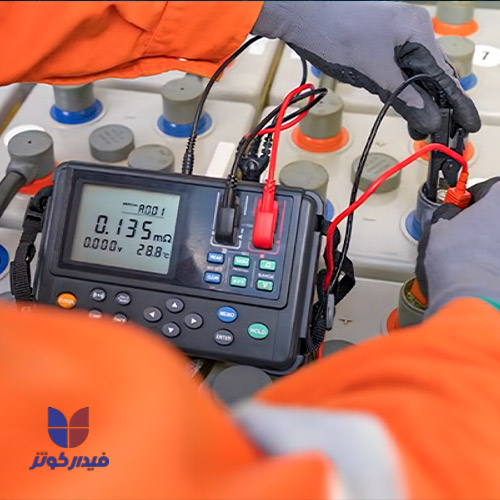
At first glance, a battery analyzer might be mistaken for a simple battery tester. However, this perception is far from reality. A battery analyzer is a sophisticated, advanced electronic device designed for the comprehensive assessment of the health, performance, and capacity of industrial batteries. This tool goes beyond simple voltage measurement, executing a series of precise diagnostic tests to measure vital parameters that reveal the true condition of the battery. For data centers, telecommunication networks, and power distribution systems that rely on stationary battery support, this device is the ideal tool for maintenance, troubleshooting, and performance testing. The fundamental difference between a "tester" and an "analyzer" lies in the maintenance philosophy. The term "tester" implies a binary result (good or bad), reflecting a traditional, reactive approach—meaning using the battery until the moment of failure. In contrast, the term "analyzer" signifies a deep, multifaceted investigation. This device provides a complete report on the battery's State of Health (SOH), allowing managers to identify degrading batteries long before they reach the point of failure. Utilizing this tool demonstrates a commitment to a Predictive Maintenance culture, which is the gold standard for modern critical infrastructure. A professional analyzer ensures that batteries are operating at their peak by providing comprehensive insights into key metrics. These parameters include:
Ultimately, by providing a precise, data-driven picture of each cell's status, a battery analyzer helps data center managers prevent unexpected failures and costly outages, maximize battery service life, and optimize the performance of the entire backup power system.

An advanced battery analyzer employs a suite of sophisticated testing methods to gain a deep understanding of a battery's internal state. Each of these tests illuminates a different aspect of battery health, and their combination enables a comprehensive diagnosis. Below, we examine the most important of these methods.
This test is the cornerstone of health assessment for industrial batteries. Internal resistance is a vital indicator of the overall condition and performance of the battery. As batteries age and degrade, their internal chemical processes deteriorate, resulting in an increase in internal resistance. This increase significantly limits the battery's ability to supply high currents during critical moments (such as during a power outage). The methodology of this test is based on Ohm's Law (V=IR). The analyzer applies a specific electrical load or an Alternating Current (AC) signal at a designated frequency (usually 1 kHz) to the battery and measures the resulting voltage drop. Through these values, internal resistance is calculated with high precision. This test is non-destructive and can be performed while the batteries are connected to the UPS system and operational (online). The most advanced analyzers utilize a technique called Electrochemical Impedance Spectroscopy (EIS). In this method, instead of a single frequency, sinusoidal signals with multiple frequencies are injected into the battery. The battery's response at each frequency provides unique information about various internal electrochemical processes (such as electrolyte resistance, charge transfer, and ion diffusion). The results are displayed in a complex graph called a "Nyquist Plot." This method, instead of providing a single number for resistance, provides a precise "fingerprint" of the battery's chemical state, enabling the diagnosis of specific failure modes (such as electrolyte dry-out or sulfation) that are not possible with simpler methods. This technique represents a transition from "black box" testing to a "glass box" understanding of battery health.
Capacity testing is the only definitive method for determining a battery's actual ability to store and deliver energy. This test directly simulates battery performance in a real-world power outage scenario. The testing process involves discharging the battery with a constant, controlled current while precisely measuring the time elapsed until the voltage reaches a specific level (cut-off voltage). Battery capacity in Ampere-hours (Ah) is derived from the product of the discharge current and this time. IEEE standards mandate performing capacity tests at the time of battery installation (as an acceptance test) and then periodically throughout their service life. This test, although time-consuming and requiring the temporary removal of the battery from service, is the most accurate metric for deciding when to replace batteries.
This test measures an unwanted alternating current (AC) component in the direct current (DC) charging circuit. The presence of high ripple voltage is one of the primary causes of rapid battery degradation. This phenomenon can result from failures in UPS system rectifiers or other charging circuit components. Therefore, ripple voltage analysis not only helps diagnose battery health but also serves as a diagnostic tool for the entire backup power system, preventing damage to healthy batteries.
Voltage and Current: Continuous monitoring of voltage and current ensures that batteries operate within safe limits and that the load is properly distributed between different battery strings. Temperature: Temperature has a direct impact on battery life and performance. High temperatures accelerate degradative chemical processes. Professional analyzers are equipped with temperature sensors (often integrated into the test probe) to adjust other measurements based on instantaneous temperature and provide a more accurate analysis. Intercell Strap Resistance: This test measures the electrical resistance of the connectors that link battery cells together in a string. A weak or corroded connection can become a "Hot Spot" and a potential point of failure for the entire system, even if the battery cells themselves are healthy.
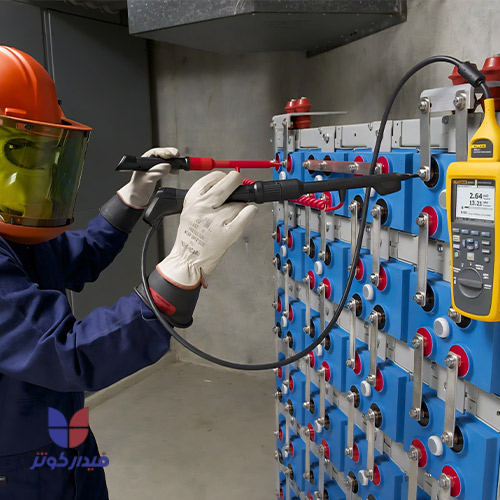
Battery health analysis tools for data centers are primarily divided into two main categories: Portable (handheld) analyzers and Online (fixed) monitoring systems. These two categories are not competitors; rather, they complement each other and cover different parts of a comprehensive maintenance strategy. The choice between them, or using a combination of both, depends on the operational maturity level and the risk tolerance of the data center.
These devices are compact, lightweight, and portable tools designed for on-site use and field testing. They are ideal for technicians who need to perform periodic inspections, troubleshoot specific issues, and conduct acceptance tests in accordance with IEEE standards. Products such as the Fluke 500 series are prominent examples of this category, specifically developed for these applications. A data center with a lower maturity level or lower risk profile might initially rely only on periodic inspections with a portable analyzer. This approach is a "Preventive" maintenance model. However, even in the most advanced data centers, these tools remain essential for verifying alarms from online systems and performing deeper tests like capacity testing.
These systems are permanently installed on battery banks and provide continuous, 24/7 surveillance. They automatically scan vital parameters such as individual cell voltage, internal resistance, and temperature at short intervals (e.g., every few seconds) and transmit the data to a central system. These systems can be implemented wired or wirelessly. The Albér series from Vertiv are well-known examples of these systems. A mission-critical, high-risk data center invests in an online monitoring system to guarantee maximum stability. This approach is a "Condition-Based" maintenance model that allows for the instantaneous detection of anomalies. In this hybrid strategy, the online system plays the role of a "smoke detector," constantly monitoring the environment, while the portable analyzer acts as the "fire extinguisher" and "inspector," used for direct intervention, verification, and problem resolution. It is worth noting that a distinction must be made between a "Battery Monitoring System" (BMS), which handles external monitoring and data collection, and a "Battery Management System" (BMS), which is often internally embedded in battery packs (especially Lithium-ion) and actively controls the charging, discharging, and cell balancing processes. The focus of this article is on monitoring systems.

Selecting a battery analyzer is a decision that directly impacts the stability and reliability of the data center. This choice should go beyond merely examining hardware features and include criteria such as compliance with standards, data accuracy, and the analytical capabilities of the software. The true value of an analyzer lies not in the device itself, but in the data-driven decisions it enables.
This is the most critical and non-negotiable criterion. The testing methods and data generated by the analyzer must align with key industry standards, especially IEEE standards. These standards define Best Practices for the maintenance, testing, and replacement of stationary batteries. Key standards include:
Compliance with these standards ensures that your maintenance procedures are defensible, standardized, and effective.
The analyzer's hardware is only half of the solution; its accompanying software is the other—and perhaps more important—half. Powerful software transforms raw data into actionable insights. Key software features include:
Ultimately, when evaluating an analyzer, one must consider the entire "ecosystem": the device hardware, the intelligence of its probes, and the analytical power of its software. This integrated suite provides a complete solution to support critical decision-making.

The field of battery monitoring, like other aspects of information technology, is evolving rapidly. Three key trends are shaping the future of this field: Artificial Intelligence, wireless systems, and the transition toward new battery chemistries. These trends do not operate in isolation but are converging to create a new paradigm of "Smart and Autonomous Power Infrastructure."
AI and Machine Learning algorithms are revolutionizing battery management systems. By analyzing massive datasets of battery behavior under various conditions, these algorithms can identify complex, non-linear degradation patterns undetectable by humans. Instead of reacting to a pre-set alarm threshold, AI-based systems can accurately predict future failures and estimate Remaining Useful Life (RUL). This transition from preventive maintenance to Predictive Maintenance enables true optimization. Batteries are replaced at exactly the right moment—neither too early (wasting money) nor too late (risking failure).
Cabling large battery banks in data centers is a complex, costly, and error-prone process. Wireless systems eliminate these cables, offering significant advantages:
The lithium-ion battery market in data centers is growing at a remarkable pace, with its volume projected to exceed $15 billion by 2033. This transition is driven by the numerous advantages of lithium-ion batteries, including higher energy density, longer life, faster charging, and smaller dimensions compared to traditional lead-acid batteries. This shift has major implications for monitoring. Lithium-ion batteries require much more sophisticated and precise monitoring systems, including cell-level monitoring and balancing to guarantee safety and optimal performance. This makes the need for advanced, granular monitoring systems more critical than ever. The convergence of these three trends paints a picture of the future data center: wireless sensors installed on every cell of a lithium-ion battery bank sending a constant stream of data to an AI engine. This AI engine analyzes the data in real-time, predictively manages the health of the entire backup power system, and prevents any disruption with minimal human intervention.

In the competitive ecosystem of data centers, accepting the risk of failure in backup power systems is not a logical option. The staggering costs of an unforeseen outage prove that proactive, data-driven management is the cornerstone of sustainable success. A battery analyzer, as explored in this guide, is your diagnostic and risk management tool. By providing deep insight into the true health of batteries, this device empowers you to act before a crisis occurs, protecting your organization's capital and operations. A comprehensive strategy, leveraging the power of continuous online monitoring and the diagnostic precision of portable analyzers, built upon recognized global standards (such as IEEE), is the only way to achieve complete confidence. Looking ahead, technologies like AI and the Internet of Things (IoT) envision a landscape of smarter, more automated backup systems. In short, view the battery analyzer not as an expense, but as an essential investment in business continuity and operational excellence. This tool is the bridge that turns uncertainty into absolute certainty.
At Fidar Kowsar, we understand the unique challenges of critical infrastructure. We are ready to help you implement a world-class battery maintenance and management strategy through comprehensive solutions and expert consulting. To evaluate your current status and design a reliable roadmap for the future, contact us today.
بعد از ورود به حساب کاربری می توانید دیدگاه خود را ثبت کنید