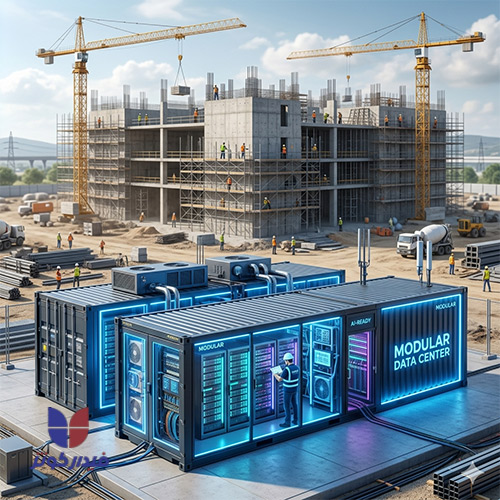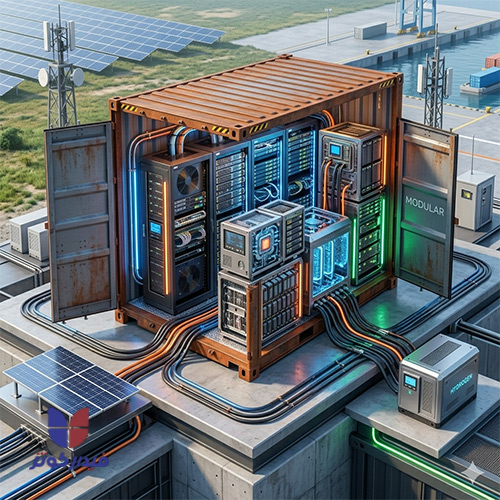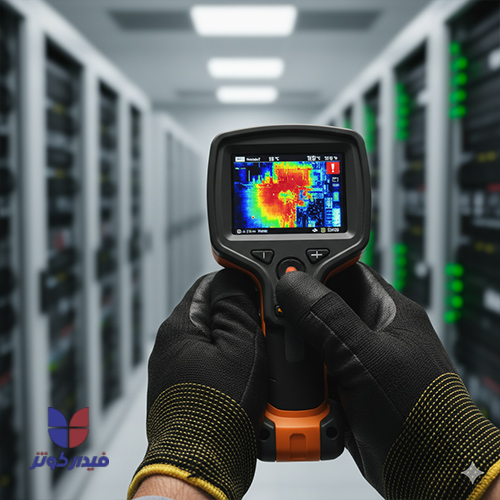
Today, data centers are recognized as the beating heart of the digital economy, and their uninterrupted performance is vital for modern businesses. However, these critical infrastructures face numerous threats—many of which stem not from complex cyberattacks, but from a silent and constant enemy: Heat. Recent catastrophic events in the industry have highlighted the importance of thermal management more than ever. For instance, during the extreme heatwave in July, data centers owned by tech giants like Google and Oracle in London went offline due to unprecedented temperatures. These incidents demonstrate that rising temperatures are not just an internal issue but a global challenge that can lead to long-term disruptions in IT operations. In such conditions, relying on traditional cooling systems is no longer sufficient. The advanced and vital solution to counter this threat is the use of Thermal Cameras; a tool that transforms thermal management from a reactive, post-incident process into a predictive and proactive strategy.
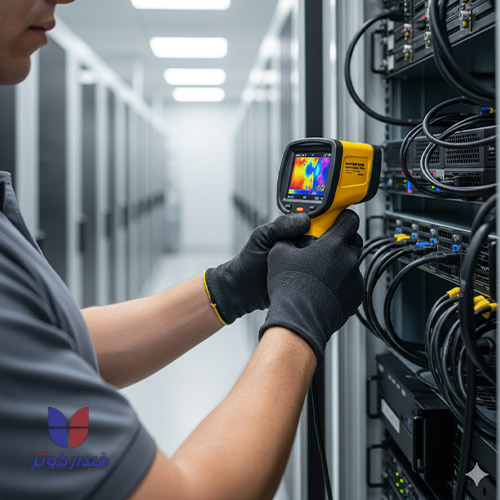
Uncontrolled temperature increases in data centers can lead to irreparable consequences. Servers and network equipment generate significant heat due to continuous operation. If this heat is not properly managed, it leads to reduced efficiency, shortened equipment lifespan, and ultimately, total system failure. This chain of events represents a financial and reputational disaster for any business. For example, the Google and Oracle outages in London, where cooling systems became practically ineffective, caused websites for many customers across Europe to go offline.
These events clearly show how external factors, such as heatwaves, can combine with internal thermal loads to bring IT infrastructures to their knees. Furthermore, the Twitter data center outage in Sacramento in September due to record heat highlights the lack of preparedness among major companies to face these challenges.
To ensure the health and optimal performance of data center equipment, adhering to global temperature and humidity standards is essential. Organizations like ASHRAE (American Society of Heating, Refrigerating and Air-Conditioning Engineers) have provided precise guidelines for this purpose. Generally, the ideal temperature for a server room should be maintained between 20°C to 24°C (68°F to 75°F). However, ASHRAE standards for different classes of equipment allow for wider operating ranges.
For instance, Class A3 equipment can operate in temperatures ranging from 5°C to 40°C. In addition to temperature, humidity is a critical factor. The ideal relative humidity in data centers is between 45% and 55%. Excessive humidity can cause condensation, corrosion, and short circuits, while very low humidity can lead to electrostatic discharge (ESD) and serious damage to sensitive components. Therefore, simultaneous monitoring of temperature and humidity is mandatory to maintain optimal operating conditions.
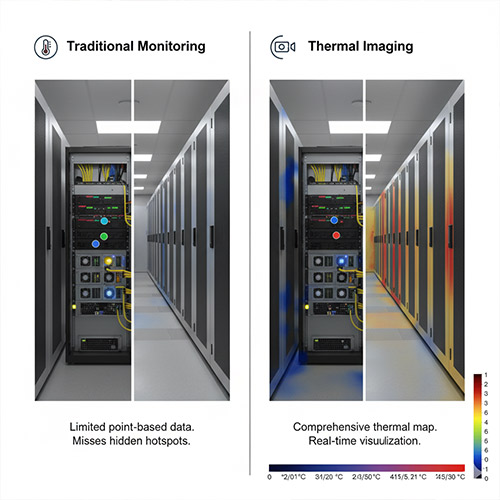
Traditional temperature monitoring methods in data centers often rely on point sensors or simple thermometers. While these sensors provide temperature data at a specific point, they have serious limitations. The most significant drawback is the failure to provide a complete picture of thermal distribution throughout the space. A point sensor might show an ideal temperature at its installation site, while just a few centimeters away, a "Hot Spot" is forming. These hidden hot spots can lead to equipment failure without prior warning. Additionally, wired sensors, due to their resistive nature, may exhibit non-linear performance and fail to provide accurate data over long distances.
This can lead managers into errors when diagnosing problems in time, causing a minor issue to escalate into a major disaster. In fact, traditional methods can only report the existence of a problem at a specific point but are unable to identify the root cause within a larger context. This fundamental limitation justifies the need for a more comprehensive tool that can visually display thermal distribution and provide a complete overview of the data center's thermal status.
| Criteria | Traditional Point Sensor | Thermal Imaging |
|---|---|---|
| Coverage | Limited to a specific point | Wide and comprehensive coverage of the entire environment |
| Real-time Visualization | Merely a numerical value | Visual and color-coded thermal map |
| Causality Diagnosis | Difficult and indirect | Easy and direct (visualizes the heat source) |
| Installation Complexity | Requires extensive wiring and multiple mounting points | Usually portable, no complex installation required |
| Limitations | Fails to show hidden hot spots, delayed detection | Higher initial cost |
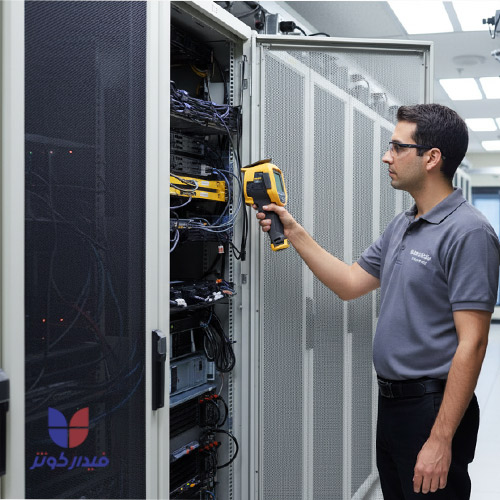
In the field of infrastructure management and maintenance, there are two primary approaches: Preventive Maintenance (PM) and Predictive Maintenance (PdM). Preventive Maintenance (PM) is a scheduled strategy involving periodic actions such as weekly or monthly inspections, cleaning, and part replacements based on a pre-determined timeline. The goal of this method is to prevent potential failures through regular interventions.
However, a major drawback of this approach is that it may not be timely; for instance, a problem can occur between two scheduled inspections, leading to a sudden outage. In contrast, Predictive Maintenance (PdM) is a data-driven strategy based on condition analysis that uses monitoring tools to assess equipment status.
Instead of following a rigid schedule, this method focuses on monitoring the actual condition of equipment to predict potential failure times and perform repairs at the optimal moment. This approach not only prevents sudden breakdowns but also reduces unnecessary costs from replacing healthy parts too early. The main difference between these two methods lies in three key factors: time, data type, and data analysis method. Preventive maintenance is a reactive-based approach that operates on scheduling, while predictive maintenance is an intelligent, data-driven approach that determines the exact time for intervention by monitoring the status.
A thermal camera is exactly the tool that predictive maintenance requires in the thermal domain. By providing a comprehensive and visual image of heat distribution instead of a single numerical value at one point, it enables the early detection of thermal anomalies. These devices detect infrared radiation emitted from objects and create a precise heat distribution map or "thermogram" that reveals temperature changes invisible to the naked eye. One of the most significant advantages of using thermal cameras in a data center is their non-invasive and non-contact nature.
This feature allows technicians to inspect energized electrical equipment from a safe distance without needing to shut them down. This not only makes the diagnosis process faster and more efficient but also reduces safety risks for personnel and prevents damage to sensitive electronic components. This advantage makes the thermal camera an ideal tool for critical environments like data centers, where any service interruption can result in heavy losses.
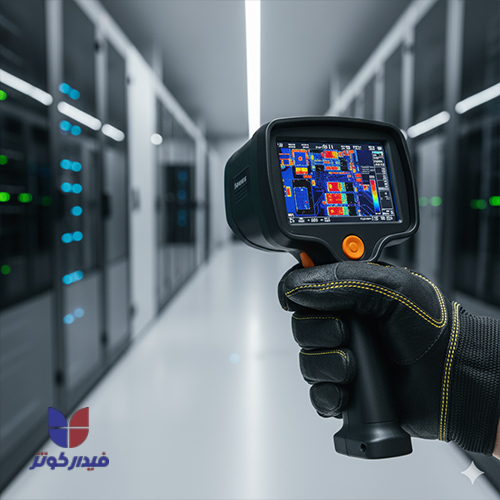
By creating a thermal map of the data center, a thermal camera clearly displays Hot Spots that indicate hidden problems. This capability enables managers and technicians to systematically and non-invasively monitor the health of their infrastructure.
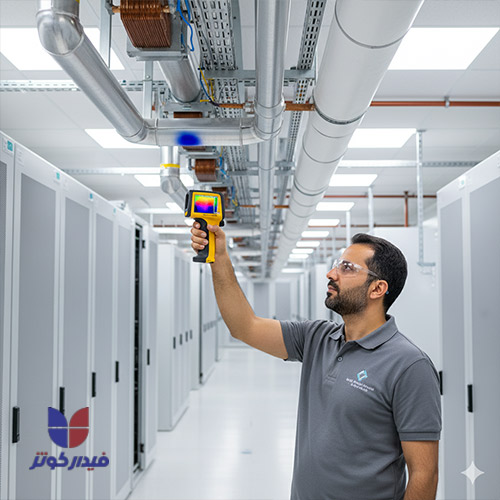
Heating, Ventilation, and Air Conditioning (HVAC) systems are vital for maintaining the ideal temperature. Thermal cameras play a key role in maintaining and optimizing these systems.
This tool not only helps identify thermal problems but also detects "Overcooling." Overcooling is as energy-wasting as overheating and increases operational costs. By detecting overcooled areas, managers can optimize cooling performance and significantly reduce costs. This sequence of actions shows how a thermal camera directly impacts productivity and reduces PUE.
One of the most important metrics for evaluating energy efficiency in a data center is PUE (Power Usage Effectiveness). This ratio represents the total energy consumed by the data center relative to the energy consumed by the IT equipment. The closer the PUE is to 1.0, the more energy-efficient the data center is. According to Uptime Institute reports, the average PUE in 2021 was 1.57. Thermal cameras play a vital role in reducing PUE.
By identifying and resolving hot spots—which force cooling systems to operate at higher capacities to cool the entire space—energy consumption can be significantly reduced. Similarly, by detecting and managing areas of Overcooling, HVAC performance can be optimized to prevent energy waste. Consequently, the ROI of a thermal camera is not just measured by preventing a single catastrophe (downtime); the real and continuous return on investment comes from daily operational optimization and PUE reduction, leading to substantial savings in energy costs.
Using thermal cameras leads to multiple measurable savings:
A hypothetical study illustrates how a data center achieved significant ROI using a thermal camera. In this study, the data center identified hot spots caused by loose electrical connections and the mixing of hot and cold air in the aisles through regular thermal monitoring. By correcting these minor issues, cooling system energy consumption was optimized, and the data center's PUE dropped from 1.6 to 1.4.
This 0.2-unit reduction in PUE led to significant annual energy cost savings, which covered the initial purchase cost of the thermal camera in less than 12 months. This example demonstrates that investing in thermography technology is not an expense, but a strategic investment to increase efficiency and reduce risk.
To choose a suitable thermal camera for a data center environment, it is essential to consider several key technical indicators:
| Technical Indicator | Description | Importance in Data Centers |
|---|---|---|
| NETD (mK) | Camera sensitivity to small temperature differences | Essential for early detection of minor anomalies and preventing major issues. |
| Resolution (Pixels) | Number of pixels in the thermal image | Determines image clarity for detailed observation of sensitive equipment. |
| Field of View (Degrees) | Extent of space visible to the camera | Enables fast aisle scanning (high FOV) and detailed inspection of distant points (telephoto lens). |
In technical literature, the terms "Thermal Camera" and "Thermograph" are sometimes used interchangeably, but they have distinct technical differences. "Thermography" is actually a "technique" or a non-invasive inspection method that utilizes infrared technology. In contrast, a "Thermal Camera" is the physical "tool" used to perform the thermography technique. This tool captures infrared radiation and converts it into a thermal image.
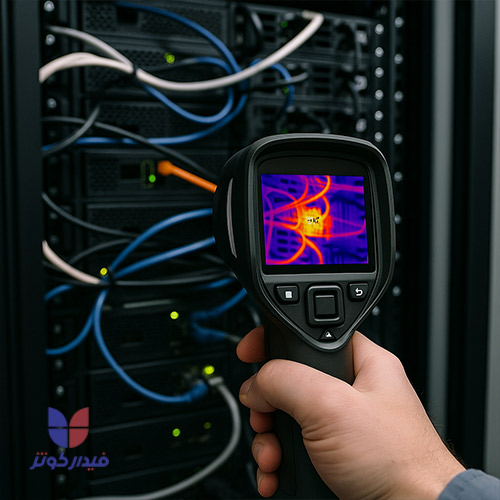
A thermal camera, or thermographic camera, is a device that uses infrared radiation to detect and display temperature differences between objects. Any object with a temperature above absolute zero emits thermal waves, which these cameras can capture and convert into visible color images.
A thermal camera uses an infrared detector to collect thermal waves emitted from an object. These waves are then converted into electrical signals and processed by the camera's internal processors into a thermal image. In these images, warmer objects are displayed in bright colors (like yellow and red), while cooler objects appear in dark colors (like blue and green).
No, a thermal camera cannot see through walls or most solid, opaque obstacles like concrete or metal. These cameras detect the surface temperature of objects. They also cannot see through glass, as thermal energy is reflected off shiny surfaces.
A night vision camera requires at least a small amount of visible light to function and creates an image by amplifying existing light. In contrast, a thermal camera requires no light source at all and operates based on the heat emitted by objects. Therefore, a thermal camera can perform effectively even in total darkness, thick smoke, or adverse weather conditions.
Thermal cameras can provide alerts by detecting sudden temperature increases in equipment before flames even become visible. This allows managers to quickly identify the heat source and take necessary actions to prevent a catastrophic fire.
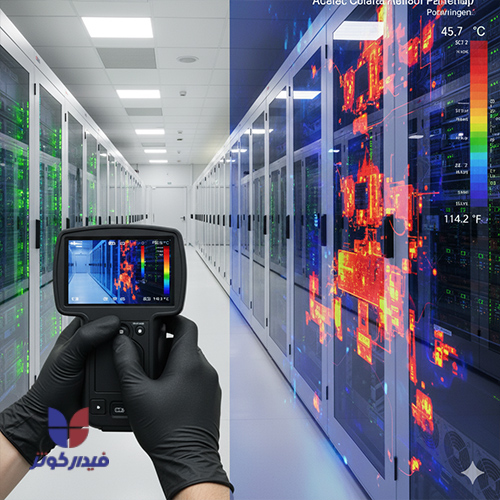
In today's digital world, where dependence on data centers is higher than ever, thermal management is no longer a secondary task but a strategic necessity. Traditional temperature monitoring methods, with their limitations, fail to provide a complete and predictive view of an infrastructure's thermal status, leaving managers at risk of sudden outages. Thermal cameras completely change this equation by providing a non-invasive and visual solution.
This tool not only allows managers to identify hidden hot spots and potential problems before a disaster occurs but also contributes to significant reductions in operational costs and increased energy efficiency (reduced PUE) by optimizing airflow and cooling systems. A thermal camera is no longer a luxury tool; it is a vital instrument for any modern, sustainable data center aiming to move from crisis management toward operational intelligence.
Prevention is always better than a cure. Before a small hot spot turns into a major disaster, contact the experts at Fidar Kowsar. We provide specialized consulting and customized solutions in data center thermal management and troubleshooting using thermal cameras to guarantee the stability and security of your operations. Contact us for a free and comprehensive consultation.
بعد از ورود به حساب کاربری می توانید دیدگاه خود را ثبت کنید