In today's world, where data has become the lifeblood of the digital economy, data centers play a role far beyond being mere server warehouses; they are the beating heart of businesses, the central databases of organizations, and critical platforms for delivering online services. The stability and uninterrupted performance of a data center are directly tied to commercial success and customer satisfaction. However, many organizations limit their maintenance of these complex infrastructures to a reactive approach, only taking action when a catastrophic failure occurs.
This negligence does not lead to savings; instead, it imposes billions in hidden and overt costs, manifesting as emergency repair expenses, loss of critical data, and, most importantly, the staggering cost of "Downtime." According to global statistics, the average cost of a single minute of unplanned downtime in data centers is approximately $8,850. This figure alone shows that a disruption of just a few hours can result in massive financial losses. In the Iranian business environment, additional factors such as currency fluctuations, power rationing, and energy supply constraints create double the challenges, making principled maintenance even more vital.
In this article, we will examine seven fatal and common mistakes in data center maintenance that can jeopardize the stability and future of your business. We will show you how a proactive and intelligent approach can prevent these exorbitant costs.
Among all the threats and challenges a data center faces, human error is recognized as the largest and most common cause of failure. Contrary to the popular belief that failures are solely due to technical defects, statistics show that staff negligence or mistakes are the primary reason for service outages. This mistake can range from an incorrect software configuration to a simple oversight in the physical environment of the data center.
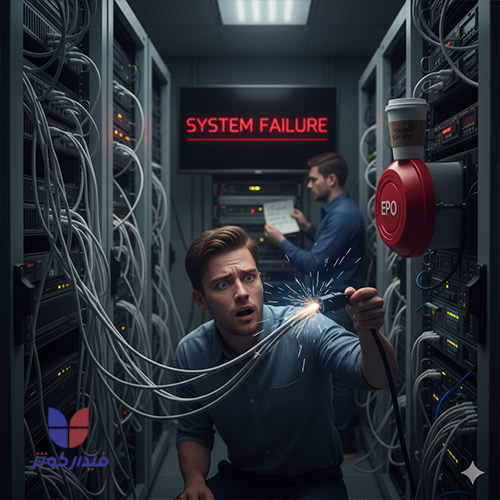
According to reports from the prestigious Uptime Institute, nearly 70% of data center outages are linked to human error. This shocking statistic identifies human error as the greatest threat to infrastructure stability, showing that even the most advanced equipment is vulnerable to the negligence of operational teams. Numerous examples of common human errors can lead to disaster: accidentally activating the Emergency Power Off (EPO) switch, unintentionally unplugging power cables from racks, or overloading a circuit.
Furthermore, mistakes in system and software configuration, lack of security updates, or the use of weak passwords can serve as gateways for cyber threats and system failures. The root cause of these errors is often not individual recklessness, but rather weaknesses in systemic and managerial processes. A lack of precise documentation, inadequate staff training, and a failure to practice crisis scenarios directly lead to an increased probability of human error, which ultimately results in failure and heavy costs. To mitigate this risk, special attention must be paid to developing comprehensive documentation, holding regular training workshops, and conducting periodic tests to evaluate the readiness of teams against crises.
Power and cooling infrastructures are the backbone of any data center, and neglecting their periodic maintenance exposes equipment to wear, failure, and ultimately, service interruption. Data centers generate a tremendous amount of heat and require powerful and efficient cooling systems to maintain optimal temperatures (recommended by ASHRAE standards to be between 18 and 27 degrees Celsius with a relative humidity between 45% and 55%). Additionally, Uninterruptible Power Supplies (UPS) and backup generators are vital for providing stable power during outages.
Neglecting the maintenance of these systems can lead to disastrous results. Failing to regularly inspect UPS batteries, ignoring load tests for backup generators, or not replacing air filters in cooling systems are common mistakes that, over time, reduce efficiency and increase the likelihood of failure. Improper maintenance of power and cooling systems not only increases the risk of downtime but also raises operational costs by decreasing efficiency and increasing energy consumption.
In conditions where power rationing can disrupt data center connectivity, relying on generators for essential power is a necessity. These generators can add 10% to 15% to operational costs, making their proper maintenance even more critical. To avoid this mistake, comprehensive checklists for power and cooling systems must be developed, and all components should be inspected and serviced regularly.
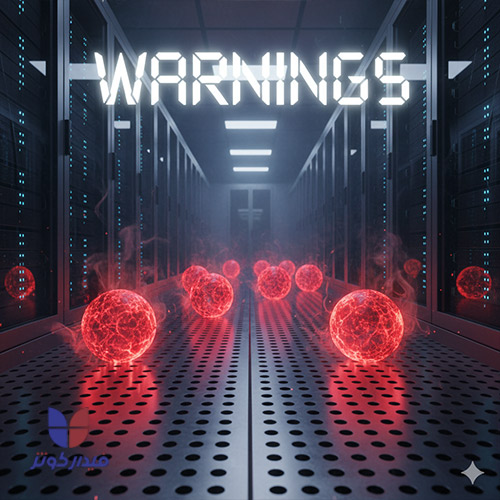
Messy and non-standard cabling is a key factor in data center problems that is often underestimated. This physical disorder is a "hidden cost" that may not be apparent in the short term but significantly drives up operational costs in the long run by increasing troubleshooting time and reducing system efficiency. Poor cabling can directly impact the efficiency, security, and stability of the entire data center. One of the greatest risks is the disruption of airflow and reduced efficiency of cooling systems, which can lead to increased equipment temperatures and hardware failure. Furthermore, tangled cables make the troubleshooting process extremely complex and time-consuming, increasing the risk of physical damage to cables and disconnection.
Common examples in this area include using improper or worn cables, over-tightening cable ties, and failing to adhere to structured cabling standards. Principled and organized cabling using cable trays and patch panels not only improves the data center's appearance but also ensures optimal airflow and makes management, repair, and troubleshooting processes much simpler and faster. Investing in cable management is an important proactive measure that prevents high repair costs and downtime in the future.

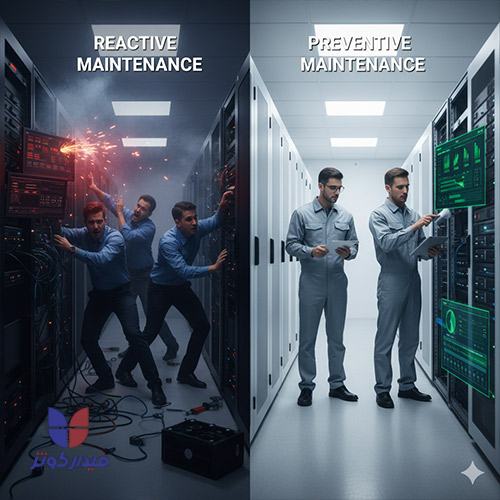
Data center maintenance can be categorized into three main methods: Reactive Maintenance, Preventive Maintenance, and Predictive Maintenance. Reactive maintenance means taking action only after a failure has occurred. While this approach might seem simple at first, it is highly costly and risky in the long run. This method often leads to emergency repairs and loss of revenue due to sudden outages. In contrast, preventive maintenance involves planned, periodic actions designed to prevent potential issues.
These actions include regular checklists such as periodic testing, cleaning, and replacing worn-out parts. Given the exorbitant costs of downtime in data centers, leading organizations view maintenance not as an expense, but as an investment to guarantee stability and reduce risk. The cost of emergency repairs, replacement parts, and lost revenue due to failure is far higher than the cost of preventive maintenance. For instance, maintenance and repair costs can account for about 5% to 10% of a data center's total annual capital expenditure, but they prevent billions in losses from outages.
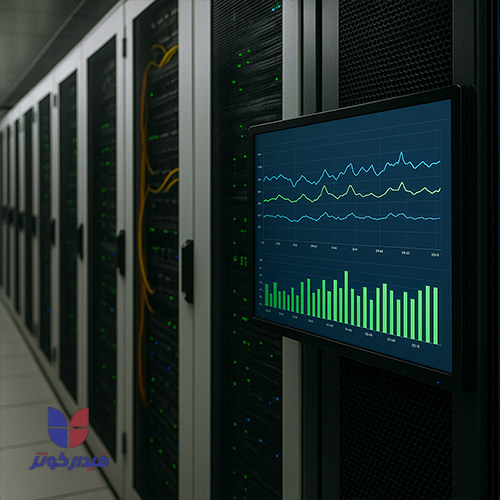
In the modern world, predictive maintenance goes a step further by using monitoring tools and data analysis to help predict failures before they happen. This approach allows organizations to prevent serious problems through full planning and readiness.
This table helps you transform preventive maintenance into a practical and executable process.
| Data Center Section | Preventive Maintenance Actions | Recommended Frequency |
|---|---|---|
| Power System | UPS battery health testing, inspecting electrical connections, performing generator load tests, cleaning electrical panels | Monthly/Quarterly |
| Cooling System | Cleaning filters, checking refrigerant levels, inspecting fans and coils, monitoring rack temperatures | Monthly/Quarterly |
| Physical Infrastructure | Visual inspection of cables, cleaning fans and cooling vents, vacuuming under-floor spaces, checking rack connections | Monthly |
| Network and Servers | Checking for hardware and software issues, updating OS and applications, network stability tests | Weekly/Monthly |
| Security System | Reviewing security logs, periodic penetration tests, changing passwords, inspecting cameras | Quarterly/Annually |
Inadequate management of energy and environmental conditions, such as temperature and humidity, not only damages equipment but also drives up operational costs to staggering levels. Due to the constant need for power for servers and cooling systems, data centers have high energy consumption, and electricity costs can constitute a significant portion of their ongoing expenses. Failure to optimize airflow and relying on outdated, high-consumption cooling systems are examples of common mistakes in this area that lead to wasted resources and additional costs.
A smart approach to energy management turns efficiency into a competitive strategy. Implementing optimized designs such as hot aisle/cold aisle, using modern cooling technologies like Free Air Cooling, and installing Building Management Systems (BMS) for real-time monitoring of environmental parameters are effective solutions for reducing costs and increasing productivity. Ultimately, optimal energy management not only helps protect the environment but also extends the lifespan of equipment by reducing operational stress.
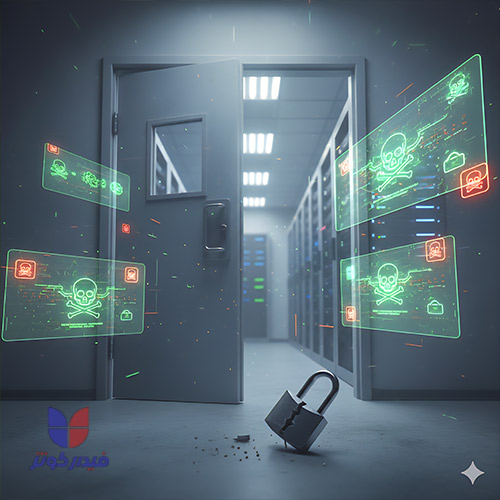
Security is a comprehensive, multi-layered process that starts with physical protection and ends with software updates. Many organizations treat these two dimensions as separate entities, which leaves the data center vulnerable to attacks. Physical security includes controlling access to the server room through locked doors, using security cameras, and multi-factor authentication systems. Neglecting these can lead to theft or intentional damage to critical equipment.
On the cyber front, emerging risks such as ransomware, supply chain attacks, and deepfakes pose serious threats to data center stability. A common mistake is negligence in updating operating systems and software, which leaves security vulnerabilities open for hackers. Furthermore, a lack of staff training regarding cyber risks can lead to human errors, such as clicking on suspicious links, giving hackers an opportunity to infiltrate. Security is not a one-time project but a continuous maintenance process requiring regular updates, periodic penetration testing, and ongoing staff training to counter emerging threats.
Documentation and record-keeping are the backbone of a successful maintenance operation. The absence of checklists and reports turns the process into an arbitrary and disorganized activity, ultimately leading to human errors and increased troubleshooting time. Without precise documentation, technical teams are forced into trial and error when facing problems, which is not only time-consuming but also increases the risk of equipment damage.
This mistake directly leads to hidden costs and loss of productivity. Lacking daily, weekly, and monthly maintenance checklists, or failing to record changes in system configurations, causes the organization to lose its "operational memory," spending excessive time and energy to solve similar problems repeatedly. Good documentation forms the organizational memory and helps teams learn from past experiences, avoid repeating mistakes, and plan for the future with greater confidence. Ultimately, documentation directly leads to reduced costs and downtime.

Data center maintenance is a strategic activity that should not be left to chance or momentary reactions. The seven common mistakes we discussed in this article clearly show that negligence in any area can lead to disastrous financial and operational consequences. With a comprehensive approach based on precise planning, preventive maintenance, continuous training, and smart investment in new technologies such as AI and automation, risks can be minimized while stability and productivity are maximized.
What is the cost of each minute of data center downtime?
According to the Uptime Institute, the average cost of unplanned downtime in data centers last year was approximately $8,850. This cost can rapidly escalate depending on the size of the business and the type of services, leading to losses in the billions.
What actions are necessary to reduce human error in the data center?
To reduce human error, which accounts for 70% of data center failures, three key actions must be implemented: first, developing precise and comprehensive documentation of all processes; second, conducting regular training programs for staff; and third, periodically practicing crisis scenarios such as power outages or cyber-attacks.
What is preventive maintenance and why is it better than reactive maintenance?
Preventive maintenance involves planned and periodic actions taken to prevent potential issues. This approach is far better and more cost-effective than reactive maintenance—which only occurs after a failure—because it prevents sudden breakdowns, extends equipment lifespan, and significantly reduces emergency repair costs.
What is the role of AI and automation in data center maintenance?
AI and automation help improve efficiency and responsiveness in maintenance operations by providing smart monitoring systems. These technologies can analyze data in real-time to identify anomalies and potential threats before they turn into crises, allowing technical teams to react swiftly and proactively.
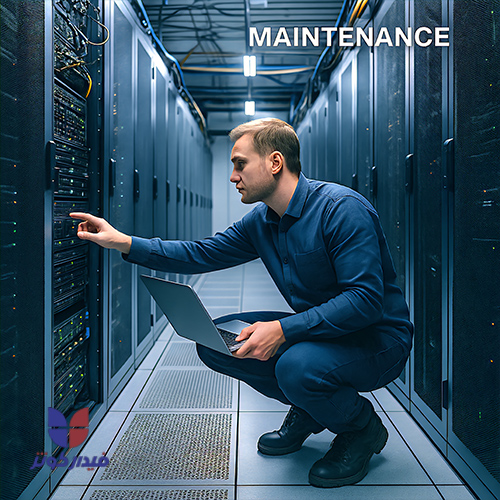
Data center maintenance is a strategic activity that should not be left to chance or reactive impulses. Fidar Kowsar's expert team, relying on deep technical knowledge and over a decade of experience in data center infrastructure, is here to help you prevent these mistakes and avoid heavy financial losses. For a comprehensive evaluation of your data center and to receive a specialized maintenance plan that guarantees the stability, security, and productivity of your business, contact us today. With Fidar Kowsar, your data center will always be one step ahead of the problems.
بعد از ورود به حساب کاربری می توانید دیدگاه خود را ثبت کنید